
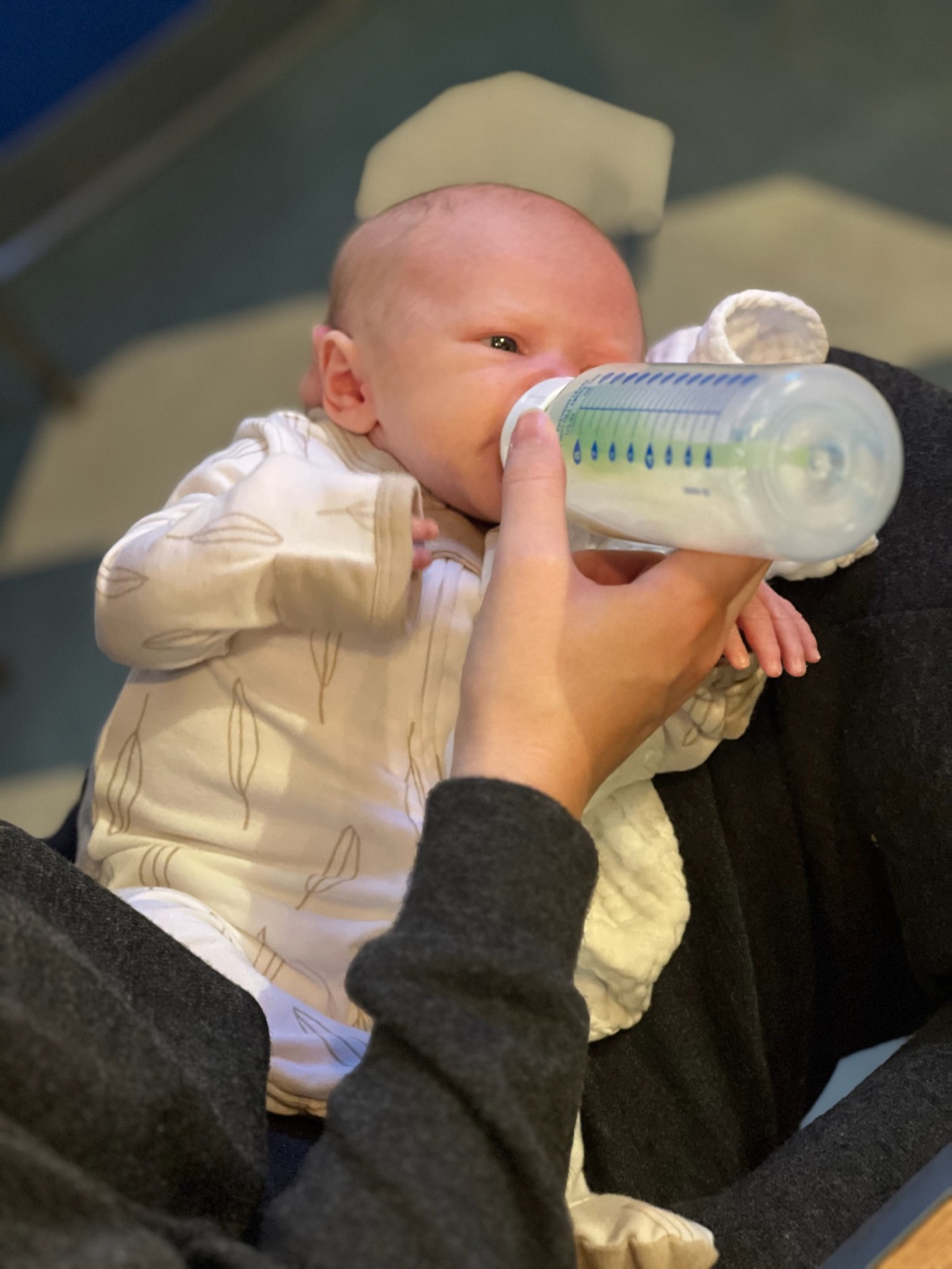
Clicking, Leaking, and Coughing During Bottle Feeds
September 9, 2026
Clicking sounds, milk leaking, coughing, or a baby who tires out during bottle feeds can point to a latch or coordination issue. Here's what these signs may mean.

I'm Kenzie Scott, a pediatric speech-language pathologist and certified lactation counselor. I come to your home to help with feeding, mealtimes, and communication, from newborns through school age.
In-home in Knoxville·Teletherapy in TN, VA & MD·Parent coaching nationwide
Fifteen minutes, no cost. I'll tell you honestly whether I'm the right person.

Painful latch, bottle refusal, clicking or coughing during feeds, slow weight gain, or feeding that hasn’t settled after a tongue-tie release.
Infant feedingGagging, a shrinking list of foods, trouble moving past purées, food refusal, or dinners that end in tears.
Feeding therapyLate talking, unclear speech, or concerns that didn’t qualify for school services.
Speech therapyNot sure? Book the call and I’ll point you to the right place.
If feeding still hurts or your baby still isn’t transferring milk well after you’ve had good lactation support, that’s usually the point to look closer. Positioning and latch changes solve a great deal, and that’s where support should start. When those have been worked on properly and feeding is still painful, inefficient, or exhausting, the question shifts to how your baby is sucking, coordinating, and swallowing. Feeds that run past 45 minutes, clicking, milk leaking, coughing, or a baby who tires out partway through are all worth a closer look.
A lactation consultant supports the feeding relationship. I assess how your baby’s mouth is working. An IBCLC handles milk supply, positioning, latch, and the feeding plan, and for most families that’s all that’s needed. I’m a speech-language pathologist, so I look at suck-swallow-breathe coordination, oral motor skill, and swallow safety when feeding isn’t improving. I’m also a certified lactation counselor, which means I understand the whole picture rather than only the mechanical part. I refer to IBCLCs regularly and work alongside them.
No. Well Said Well Fed is a private-pay practice. I provide a superbill for eligible clinical therapy services, which some families submit to their out-of-network benefits. Reimbursement depends on your specific plan and I can’t promise an amount. Parent coaching through the Well Fed Method isn’t eligible for insurance or superbills, because it’s coaching for you rather than therapy for your child. Private pay also means no waitlist and no session caps set by a plan.
Often yes. Most toddlers narrow their range between eighteen months and three years, and it usually passes. What’s worth a closer look is a list that keeps shrinking with nothing replacing what drops off, whole textures or food groups disappearing, real distress rather than disinterest, trouble chewing, coughing during meals, or a family that has quietly reorganised itself around avoiding a meltdown. One of those is worth a conversation. Several together usually means a new strategy won’t be enough.
After you reach out, I’ll contact you to schedule within 48 hours.
We talk for fifteen minutes so I understand what’s happening. If I’m the right fit, I come to your home and watch a real feed or a real meal, not a performance for a stranger. You get a written plan, and you can message me between visits.
If you need someone else, I’ll tell you and help you find them.
I’m a pediatric speech-language pathologist and certified lactation counselor with over a decade of experience supporting infants, toddlers, and families across children’s hospitals, pediatric settings, feeding clinics, and private practice. Feeding and communication are treated separately almost everywhere. I do both, which means one person can look at the whole picture.
Fifteen minutes, no cost. I'll tell you honestly whether I'm the right person.

September 9, 2026
Clicking sounds, milk leaking, coughing, or a baby who tires out during bottle feeds can point to a latch or coordination issue. Here's what these signs may mean.

September 9, 2026
Not sure whether your baby's feeding needs a closer look? Here are the signs that may point to an infant feeding evaluation, and what to do next.

September 8, 2026
Is your baby refusing bottles? Learn common reasons for bottle refusal, when to seek help, and how an infant feeding specialist in Knoxville can support your family.